Group members: Larissa Swift, Paul Palazuelos
Project Name Possibilities: “One Hand Clapping” “Shoulder Buddy” “Nobody’s Critic”
A high-five is the simplest and most versatile way to celebrate anything. Your friend found a dollar on the ground? High-five. A loveable underdog just stopped an alien invasion? High-five. You knew the answer to a high stakes jeopardy question? You deserve a high-five. Receiving a high-five can make you feel important, appreciated, and heard in any situation.
However, sometimes your finest moments can go unseen, especially in this complicated digital age. People are becoming increasingly connected, but at the same time, are feeling more lonely than ever. A nationwide survey by the health insurer Cigna, using the UCLA Loneliness Scale, demonstrated that nearly 50% of respondents felt lonely. It was also found that young adults felt more lonely than older generations. The average loneliness score for Generation Z was 48.3, and 45.3 for Millennials, compared to an average score of 42.4 for baby boomers. Anyone scoring over 43 was considered lonely.
Not only can a high-five help with loneliness, it can also increase motivation. This non-verbal gesture has shown to be more effective in increasing motivation that other verbal forms of praise. While verbal praise can direct a person to feel complacent with their efforts by expressing satisfaction for achieving a goal, the high-five creates enough ambiguity for a person to accept praise while striving to improve. The ambiguity does not address any standards or benchmarks achieved, therefore allowing the recipient to believe their effort can can continue along the approved path. It is for this reason that our high-five machine will be a great substitution for a friend if one is not present.
This project will have multiple points of articulation each controlled by a servo motor. The device will be activated by a proximity sensor to detect a human hand waiting to receive a high-five. As the device will resemble a human arm, the most basic movement of a shoulder joint and elbow joint will be sufficient enough to create the movements of a high-five. If time permits, more than 2 points of articulation will be created to perform a more realistic high-five motion or other acts of gestural praise. Once performing its action, the device will return to its initial state of rest. Our high-five machine will be situated on a base small enough to be placed conveniently in areas of productivity such as a work desk locations of awesomeness.
The idea of a machine that detects a waiting hand for a high-five derives from the experience of being a student at a university. Quite often, students find themselves in an unfamiliar place far away from the place they grew up at and far from friends and family. Those people who surrounded them previously were primarily the ones who facilitated praise and encouragement. Without friends, family, and being in a new environment, students can struggle to find friends or study partners which can contribute to a lack of motivation. We are looking to address this potential problem by providing a means of praise to help with self motivation.
Timeline:
| Goal | Assigned Tasks | |
| Week 6 | Have all parts ordered and have all implementation details set in stone | Paul: Begin modeling hand for 3D printing
Larissa: Begin basic prototyping of hand/arm mount |
| Week 7 | Assemble parts, begin prototyping
Take photos and notes of each step 2nd Project Deadline (11/12/18): Documentation of prototype (working experimentation) |
Paul: Print prototype hand
Larissa: Test low fidelity mount Both: Draft code |
| Week 8 | Continue taking photos and notes of prototyping progress
3rd Project Deadline (11/19/18): -final materials gathered -progress report (Photo Documentation and written report on progress made) |
Paul: Assemble parts
Larissa: Choose mount design Both: Debug code, simplify wiring |
| Week 9 | All basic functions should work, final debugging and testing | Paul: Assemble final design
Larissa: Make final mount |
| Week 10 | Final testing | Both: test and debug |
| Week 11 | Presentation | Both: present project |
Inspiration:

Hand Mechanics(to be referenced for detailed articulation)
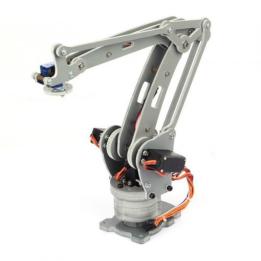
Elbow Mechanics
Resources:
Fetzer.org. (2018). [online] Available at: http://fetzer.org/sites/default/files/images/stories/pdf/selfmeasures/Self_Measures_for_Loneliness_and_Interpersonal_Problems_UCLA_LONELINESS.pdf [Accessed 5 Nov. 2018].
Lifehacker.com. (2018). [online] Available at: https://lifehacker.com/build-a-kickass-robot-arm-the-perfect-arduino-project-1700643747 [Accessed 5 Nov. 2018].
Lumsden, L. (2018). Student Motivation To Learn. [online] Files.eric.ed.gov. Available at: https://files.eric.ed.gov/fulltext/ED370200.pdf [Accessed 5 Nov. 2018].
Morris, Bradley J., and Shannon R. Zentall. Frontiers in Psychology, Frontiers Media S.A., 2014, http://www.ncbi.nlm.nih.gov/pmc/articles/PMC4145712/.
Npr.org. (2018). NPR Choice page. [online] Available at: https://www.npr.org/sections/health-shots/2018/05/01/606588504/americans-are-a-lonely-lot-and-young-people-bear-the-heaviest-burden [Accessed 5 Nov. 2018].
Placona, M. and Firebase, H. (2018). High Five Machine with Android Things and Firebase. [online] Hackster.io. Available at: https://www.hackster.io/marcos-placona/high-five-machine-with-android-things-and-firebase-e7aab2 [Accessed 5 Nov. 2018].

 One Hand Clapping